

Weather Resistance and Corrosion Protection for Aluminum Alloy Handles: A Durability Guarantee for Demanding Environments
Oct 07, 2026
The weather resistance and corrosion resistance of aluminum alloy handles are key advantages that distinguish them from traditional metal handles, making them particularly well-suited for harsh environments-such as those that are humid, dusty, or located outdoors:
1. A Protective Barrier via a Natural Oxide Layer
Aluminum alloy surfaces naturally develop a dense oxide film (Al₂O₃), approximately 0.01–0.1 μm thick. This film is insoluble in water and resistant to acid and alkali corrosion; it effectively prevents moisture and oxygen from reaching the underlying metal, thereby fundamentally inhibiting rust. In contrast, iron-based handles rely on protective coatings to prevent rust-if the coating wears off, the metal becomes susceptible to corrosion. With aluminum alloy handles, however, even if the surface is scratched, the exposed metal quickly forms a new oxide layer, ensuring continuous corrosion protection.
2. Enhanced Adaptability Through Diverse Surface Treatments
To further improve weather resistance and aesthetic appeal, aluminum alloy handles can undergo various surface treatment processes:
Anodizing: This process creates a hard oxide film (5–20 μm thick) with a hardness that can exceed HV300. Beyond enhancing corrosion resistance, it allows for various finishes-such as matte, glossy, or colored (e.g., silver, black, or gold)-to suit different design styles.
Electrophoretic Coating: This technique applies a uniform organic coating to the surface. It offers strong adhesion and excellent resistance to UV-induced degradation, making it ideal for outdoor applications (such as garden storage cabinets or outdoor electrical enclosures).
Sandblasting: This process creates a textured, rough surface that improves grip while providing an understated, industrial aesthetic-well-suited for functional settings like workshops or laboratories.
These treatments enable aluminum alloy handles to perform reliably in temperatures ranging from -40°C to 80°C. They can also withstand 500–1,000 hours of salt spray testing, fully meeting the requirements for use in highly corrosive environments, such as coastal areas with high humidity or chemical processing facilities.
You Might Also Like
-

Oukali Modern 96-192mm Zinc Alloy Handles for Kitchen Cab...
-
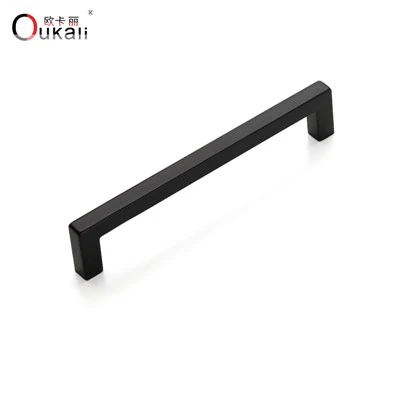
Oukali 128mm Zinc Alloy Minimalist Style Handle for Kitch...
-

Oukali Vintage 128mm Zinc Alloy Antique Style Handle for ...
-

Oukali Modern Single Hole Zinc Alloy Kitchen Knobs for Ca...
-

Oukali Modern Zinc Alloy Door Lock for Indoor and Interio...
-

Oukali Modern Single Hole Knob Timber Handles for Kitchen...